counterfeit banknote
The counterfeit banknote is a forged five-pound note that Mr. Frederick of Pinchfield Farm uses to defraud Napoleon in the sale of a pile of seasoned timber, an event that exposes the pigs' vulnerability to human cunning and triggers the Battle of the Windmill. The transaction, conducted through the intermediary Mr. Whymper, represents the first major financial deal between Animal Farm and the outside world, and its failure shatters the animals' brief illusion of prosperity, leading directly to the destruction of the windmill and a brutal military confrontation.
Negotiation and Payment
Napoleon had been hesitating for some time between selling the timber to Mr. Pilkington of Foxwood or to Mr. Frederick of Pinchfield, with the decision swayed by rumors about Snowball's whereabouts. Frederick, more eager to acquire the wood, initially refused to offer a reasonable price. Napoleon, however, proved too clever for Frederick's first attempt at payment: Frederick wanted to pay with a cheque, a piece of paper with a promise to pay written upon it, but Napoleon demanded real five-pound notes, which were to be handed over before the timber was removed. Frederick paid up, and the sum he paid was just enough to buy the machinery for the windmill. The timber was carted away at high speed, and a special meeting was held in the barn for the animals to inspect the banknotes. Smiling beatifically and wearing both his decorations, Napoleon reposed on a bed of straw on the platform, with the money at his side, neatly piled on a china dish from the farmhouse kitchen. The animals filed slowly past, and each gazed his fill; Boxer put out his nose to sniff at the banknotes, and the flimsy white things stirred and rustled in his breath.
Discovery of the Fraud
Three days later, a terrible hullabaloo erupted. Mr. Whymper, his face deadly pale, came racing up the path on his bicycle, flung it down in the yard, and rushed straight into the farmhouse. The next moment a choking roar of rage sounded from Napoleon's apartments. The news sped round the farm like wildfire: the banknotes were forgeries. Frederick had got the timber for nothing. Napoleon called the animals together immediately and in a terrible voice pronounced the death sentence upon Frederick, declaring that when captured, Frederick should be boiled alive. He warned them that after this treacherous deed the worst was to be expected, and that Frederick and his men might make their long-expected attack at any moment. Sentinels were placed at all the approaches to the farm, and four pigeons were sent to Foxwood with a conciliatory message, hoping to re-establish good relations with Mr. Pilkington.
Consequences: The Battle of the Windmill
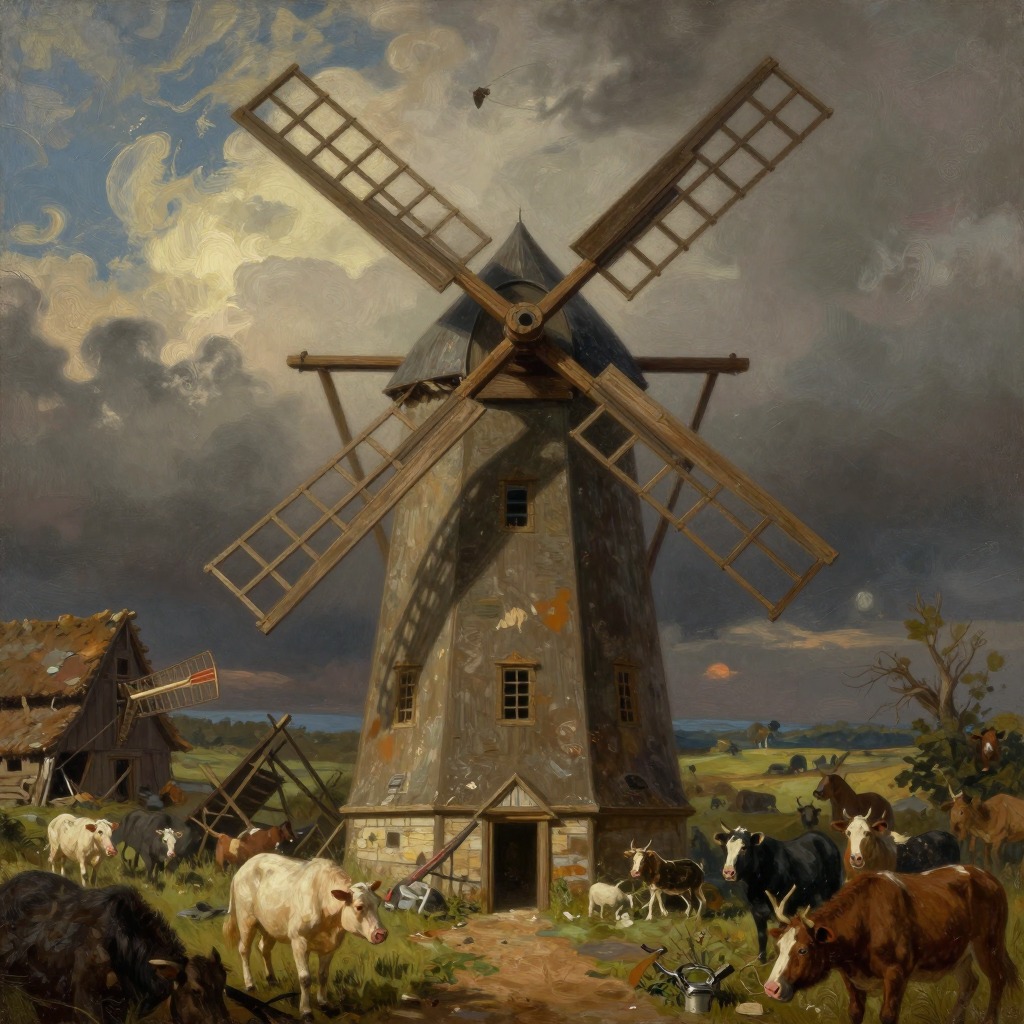
The very next morning, the attack came. Frederick and his followers, fifteen men with half a dozen guns, opened fire as soon as they got within fifty yards. The animals could not face the terrible explosions and the stinging pellets, and in spite of the efforts of Napoleon and Boxer to rally them, they were soon driven back. The whole of the big pasture, including the windmill, fell into enemy hands. The men drilled a hole near the base of the windmill, packed it with blasting powder, and detonated it, destroying the structure completely. The animals, enraged, charged forth in a body and fought a savage, bitter battle, driving the men off but suffering heavy casualties: a cow, three sheep, and two geese were killed, and nearly everyone was wounded. The windmill lay in ruins, its stones scattered hundreds of yards by the force of the explosion. In the general rejoicings that followed the animals' pyrrhic victory, the unfortunate affair of the banknotes was forgotten, but the economic and physical damage had been done, and the farm faced the prospect of rebuilding the windmill from its foundations once again.